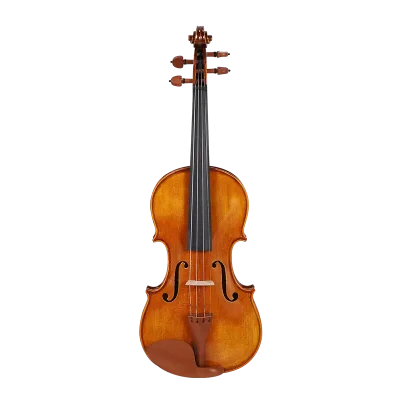

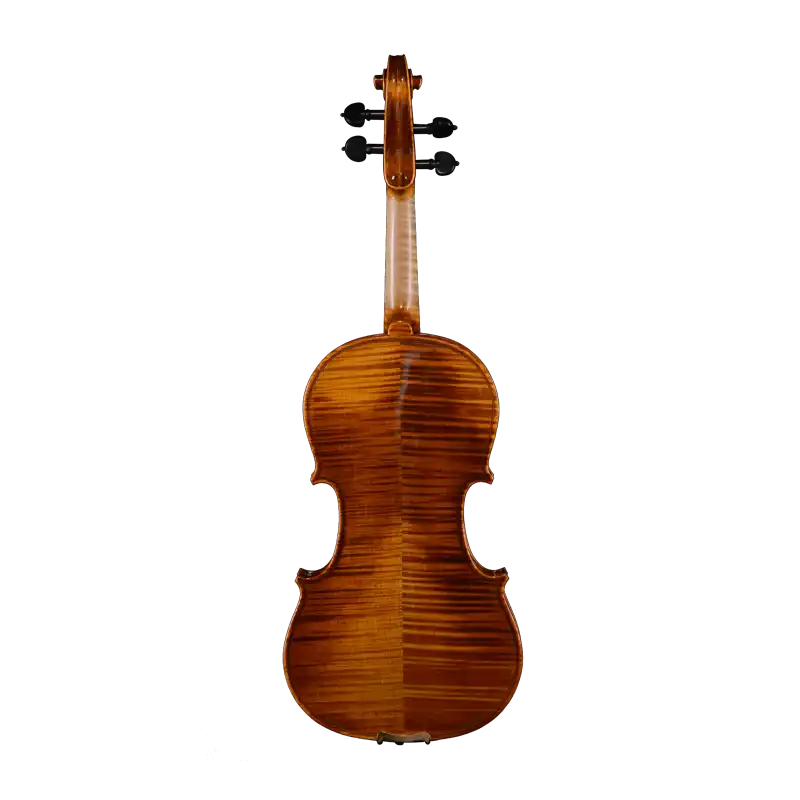
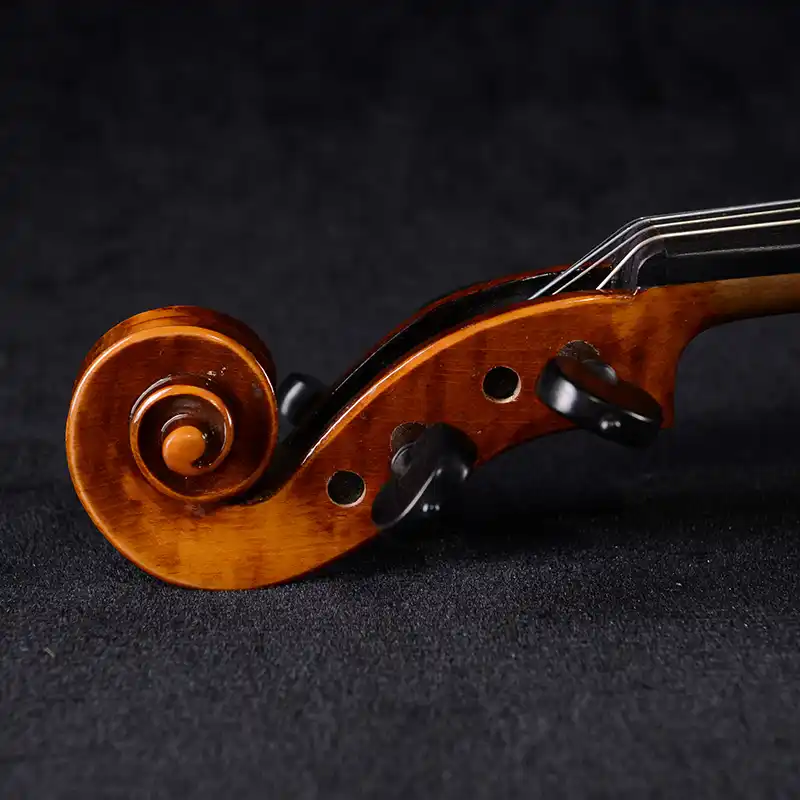



| Violin Size | 3/4, 7/8, 4/4 (Full Size) |
|---|---|
| 面板 Top Plate / Belly | |
| 背板 & 侧板 Back Plate & Ribs | 欧洲火焰纹枫木/Selected European flamed maple tonewood |
| 琴 头&琴颈Scroll&Neck | |
| 指板 Fingerboard | 乌木 / 黑檀 Ebony |
| 琴码 Bridge | A级 A/Master Grade Bridge |
| 配件 Pegs,Tailpiece,Chinrest | 乌木 Ebony |
| 油漆 Varnish | 传统油性漆 Traditional Oil Varnish |
| 琴盒 Case | 专业方盒 Professional Violin Case |
| 琴弓 Bow | 优质苏木 Pernambuco |

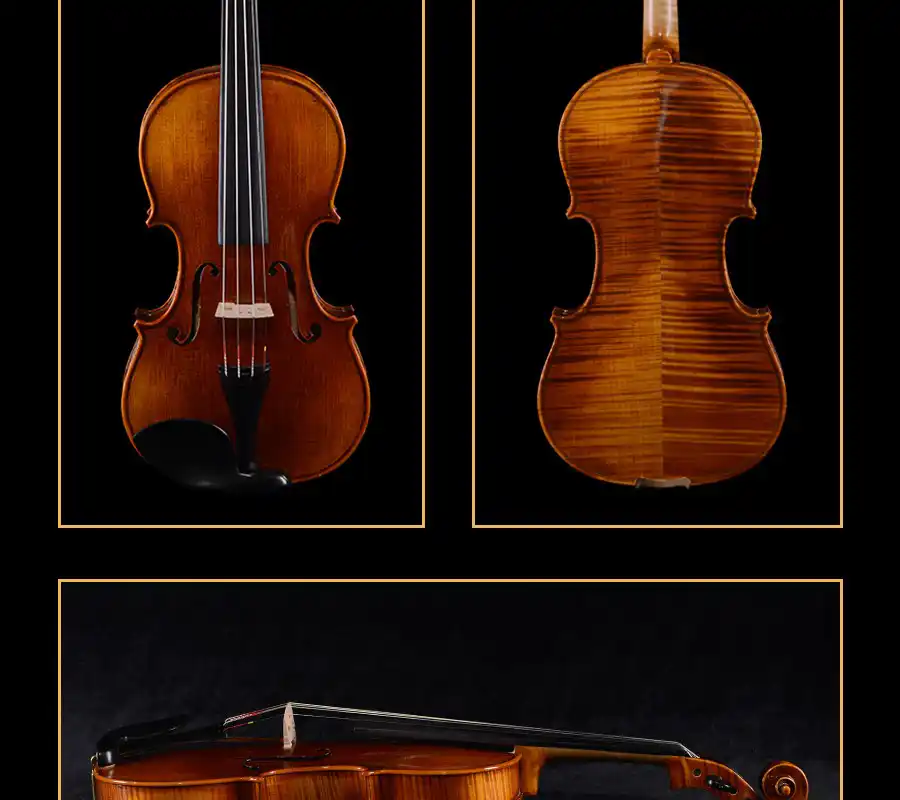
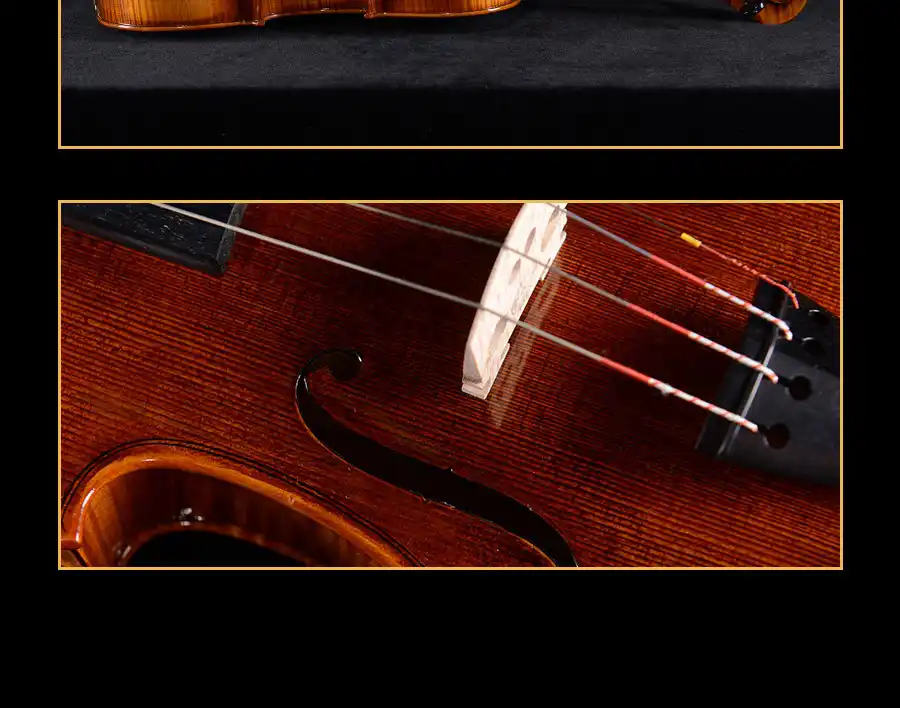
Professional violin wholesale only works when the instrument can be specified clearly and reordered confidently. LV66 is designed as a professional-tier outfit with a spruce top, European maple back and sides, ebony fittings, imported strings, an MV850 bow, and a premium case. This specification is not written to impress with vague adjectives; it is written to reduce friction for importers and distributors who need a stable SKU that performs consistently across shipments. In many B2B programs, the end user is not a collector—they are a serious student, an ensemble player, or an institution that needs dependable response and professional presentation.
The spruce top supports clarity and articulation, while European maple on the back and ribs adds focus, structure, and a refined visual identity suitable for performance-oriented catalogs. The overall goal is a balanced instrument that does not punish technique with unstable feel: clean bow changes, predictable resistance, and a centered response that helps advancing players stay confident. If you want a neutral, authoritative reference to support buyer education about the violin as an instrument category, Encyclopaedia Britannica provides a concise overview that can be used by your sales team without turning the product page into a technical manual: Britannica: Violin.
LV66 is positioned within our professional tier for buyers who want a clear upgrade line. For catalog navigation and tier consistency, keep the buyer journey aligned within the same level: Professional Violins. This helps distributors maintain clean price ladders and reduces confusion caused by mixing premium language with entry-level products.
One of the most common B2B pain points is inconsistent first impression after delivery. LV66 addresses that issue by specifying imported strings, which helps produce a cleaner, more controlled initial response for many customers compared with generic bundled strings. For distributors and schools, this matters because the first few minutes determine perceived value: the instrument should speak clearly, hold tuning reasonably, and feel immediately usable. Imported strings are not positioned here as a marketing trick; they are a practical choice to reduce setup complaints and to make the instrument easier to present as a professional outfit.
In wholesale programs, the “ready-to-play” story must be realistic. That is why LV66 also uses ebony fittings—ebony fingerboard, ebony pegs, ebony tailpiece, and ebony chinrest—to support stable handling and service life. Ebony is a standard material in higher-tier fittings because it performs predictably under repeated use and temperature/humidity changes. When instruments circulate through rehearsal rooms, retail counters, or institutional inventory, predictable fittings reduce friction and lower after-sales workload.
If you want to frame craft language in a professional, non-hype way, the Violin Society of America provides industry context around the craft of making and preserving violin-family instruments and bows: Violin Society of America: About. This kind of reference supports a premium narrative while keeping your product description grounded in repeatable specifications and practical B2B outcomes.
Professional violin wholesale buyers often sell through catalogs, showrooms, and academy channels where presentation matters as much as response. LV66 is designed to look intentional and cohesive: European maple back and sides offer a refined visual base, while ebony fittings provide a disciplined, professional finish. This matters because premium customers notice details immediately—especially in higher-tier programs where the instrument must look credible next to more expensive options.
The practical benefit for B2B buyers is catalog consistency. When a distributor lists a professional line, the product should not appear to “borrow” parts from lower tiers. LV66 maintains a professional specification that can be repeated across batches, helping importers reduce internal sorting and preventing mixed impressions across units. The spruce-and-maple structure supports a familiar response profile for serious students and ensemble players, while imported strings and stable fittings support a cleaner first experience at delivery.
For wholesale buyers who bundle and upsell accessories, keep add-ons standardized and easy to reorder. A single accessory hub simplifies procurement and supports consistent bundle naming across markets: Accessories. This is especially useful for importers who supply cases, rosin, shoulder rests, and maintenance items alongside instruments and want to reduce vendor fragmentation.
Many professional violin wholesale orders are ultimately private label programs. LV66 is suitable for importers who need a stable base specification and a controlled branding layer—logo marking, carton marks, bundle naming, and finish coordination—without changing the product tier. The most expensive failure mode in private label sourcing is silent spec drift: a reorder arrives and looks “almost the same,” but not identical, which damages trust and increases returns. The solution is to align process and checkpoints so reorders behave like reorders.
If you want a clean operational reference for OEM/ODM programs, use a single page as the process anchor inside your purchasing workflow: OEM/ODM. A good OEM program makes ordering easier: one specification sheet, one sample rule, one packing standard, and one consistent naming system. LV66 is designed to support that discipline by keeping the core specification professional, so branding changes do not create tier confusion.
For importers scaling multi-market distribution, this matters: a stable professional SKU reduces training costs for sales staff, improves listing consistency across channels, and protects your catalog ladder. The best wholesale programs are not built on dramatic claims—they are built on repeatability.
Professional violin wholesale programs depend on clear QC checkpoints and predictable logistics. LV66 supports batch QC alignment focused on appearance consistency, assembly integrity, fittings stability, and packing readiness. When QC language is shared between supplier and importer, receiving becomes faster and disputes become rarer. For a consistent reference point, use: QC.
Export packaging discipline is also part of professional supply. Many trade lanes pay attention to wood packaging requirements and ISPM 15 compliance where regulated wood packaging material is used. For U.S.-bound shipments, USDA APHIS provides clear guidance on regulated wood packaging material and ISPM 15 treatment/marking expectations: USDA APHIS: Wood Packaging Material. This type of authoritative link helps buyers understand why packaging choices are risk controls, not cosmetic options.
For delivery, many wholesale programs plan within a 7–15 day shipping window depending on order volume, customization scope, and destination coordination. Keep operational expectations consistent for your buyers through: Shipping/Delivery/Packaging. Predictable QC, predictable packing, and predictable planning windows are what turn a professional-tier instrument into a repeatable wholesale program.
Q1: What makes LV66 easier to sell as a professional wholesale outfit?
Imported strings, ebony fittings, and a professional-grade presentation (MV850 bow + premium case) support a cleaner first impression and a stable catalog story.
Q2: What tonewoods are specified?
A spruce top with European maple back and sides, selected for repeatable wholesale specification.
Q3: Can this be used for academy ladders or performance programs?
Yes. LV66 is positioned in the professional tier for serious study, ensemble use, and performance-oriented distribution.
Q4: Do you support OEM branding and standardized packaging?
Yes. We support logo marking, carton marks, bundle naming, and standardized packing for reorder consistency.
Q5: What delivery planning window is typical?
Many programs plan within 7–15 days depending on quantity and destination coordination.