
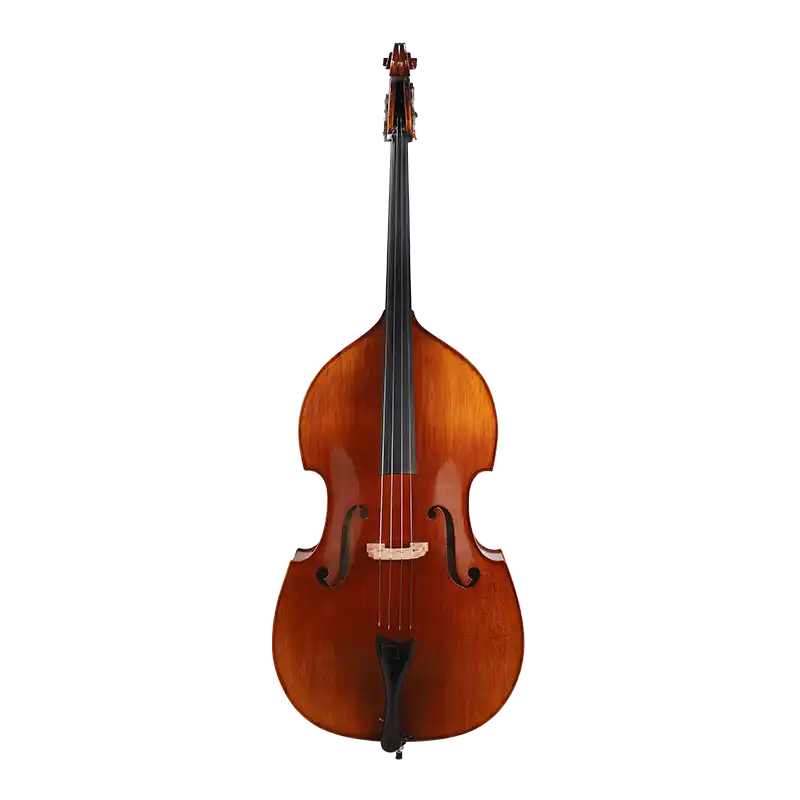
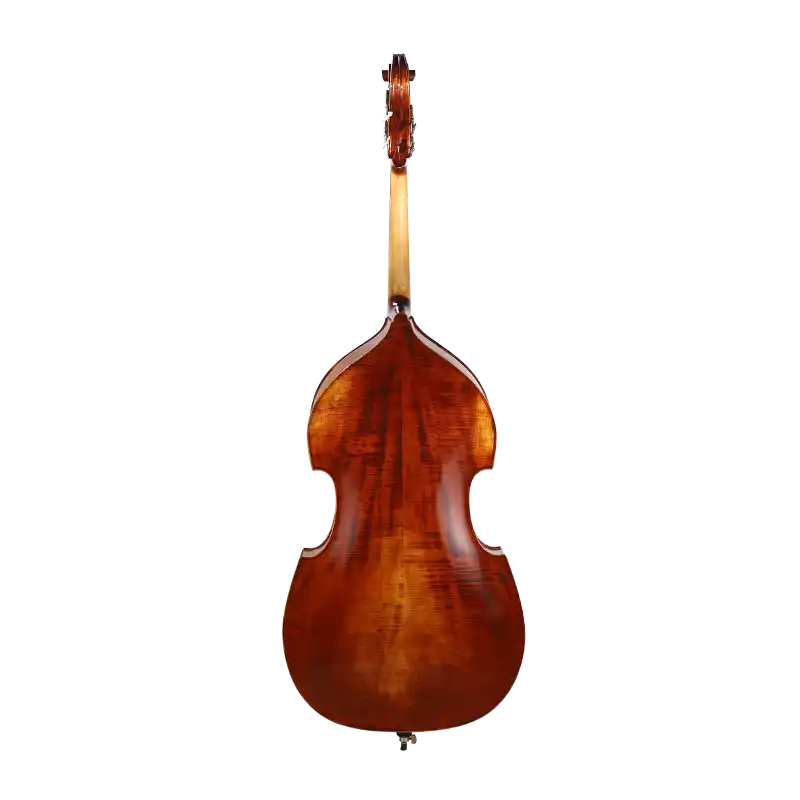


| Double Basses Size | 1/2, 3/4, 4/4 |
|---|---|
| 面板 Top Plate / Belly | |
| 背板 & 侧板 Back Plate & Ribs | 高级火焰纹枫木 Highly Flamed Maple |
| 琴 头&琴颈Scroll&Neck | |
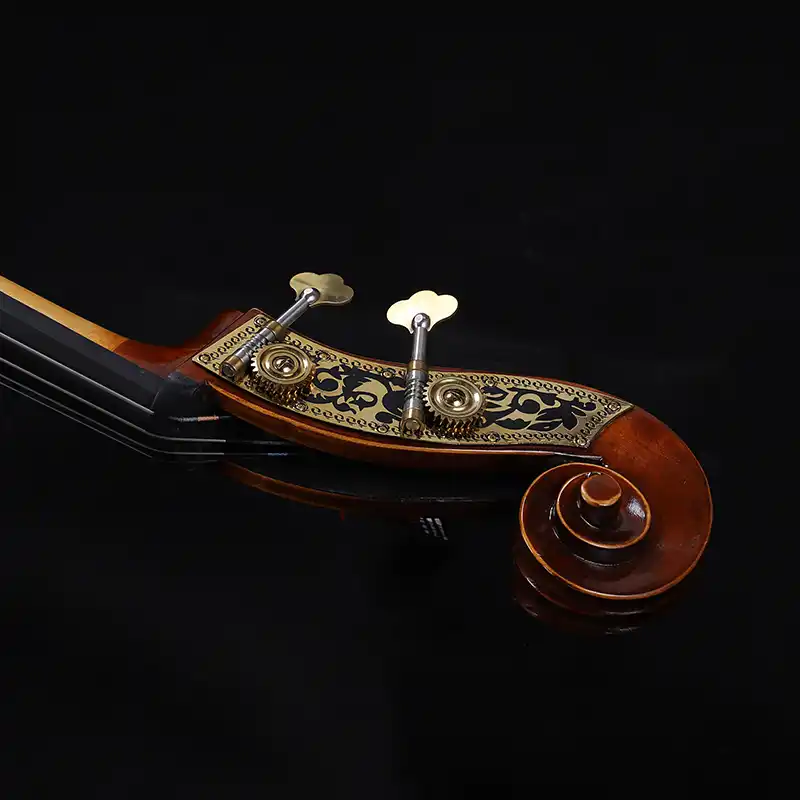
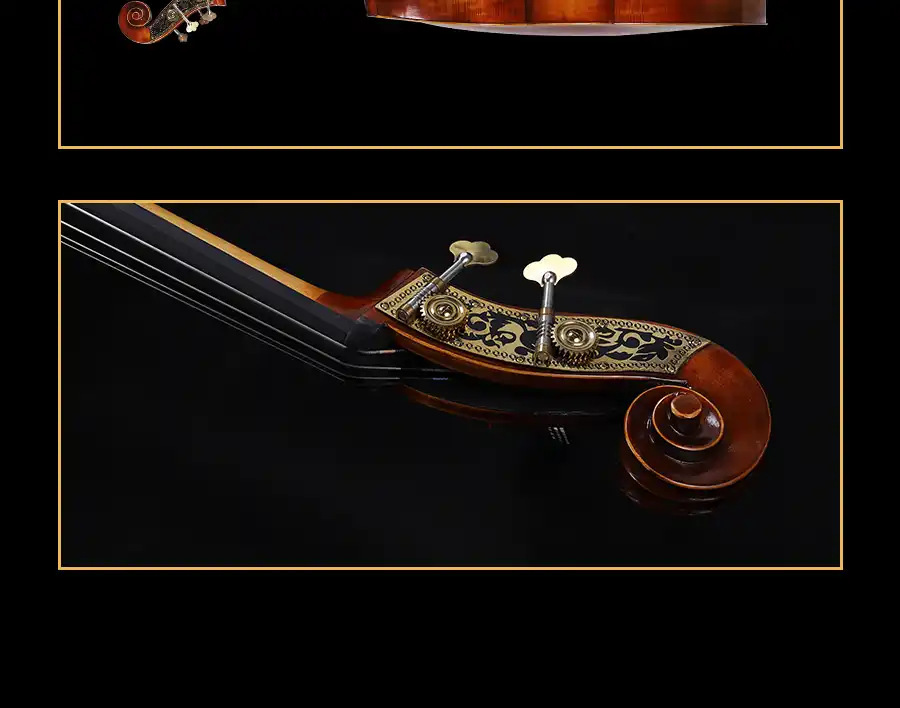
| 弦钮 tuning machines / machine heads | 双联 / Two-on-a-plate (Plate-style) |
| 指板 Fingerboard | 乌木 / 黑檀 Ebony |
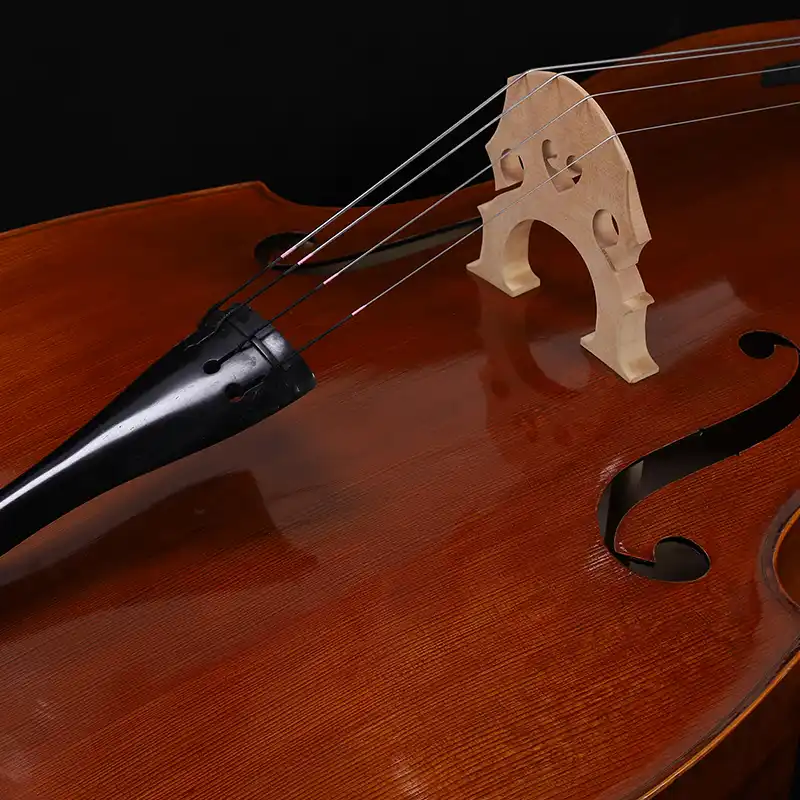
| 琴码 Bridge | A级 A/Master Grade Bridge |
| 拉板 Tailpiece with Tailgut | 乌木 / 黑檀 Ebony |
| 油漆 Varnish | 传统油性漆 Traditional Oil Varnish |
| 大贝斯 Double Bass Case Options | Canvas Bag (Free) / Hard Case (Paid) |
| 琴弓 Bow | 优质苏木 Pernambuco |

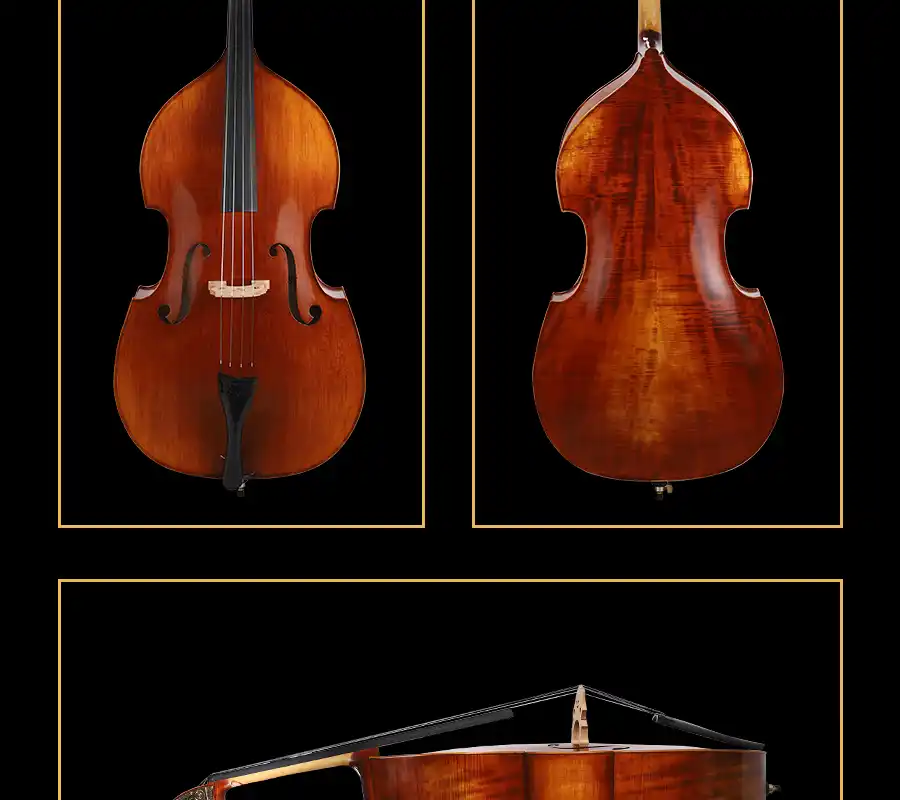
An Intermediate Double Bass is where expectations change: the instrument must hold up when practice becomes structured, rehearsal time becomes valuable, and ensemble accuracy starts to matter. This build is designed for advancing students and program buyers who want a clear step up in stability, feel, and tonal focus without moving into fragile, high-maintenance territory. The tone platform begins with a spruce top for responsive articulation, paired with a flamed maple back and sides that add both visual character and a more defined, projecting core. In a rehearsal hall, that focus helps notes speak with less “spread,” making sections feel tighter and lines easier to hear.
Equally important is control under the left hand and at contact points. Ebony fittings are specified because they are durable and consistent: an ebony fingerboard supports cleaner shifting and reduces uneven wear, while an ebony tailpiece contributes to a tidy, professional feel. These are the areas where intermediate players notice differences immediately—when the instrument responds predictably, technique improves faster because the feedback is honest.
If you are curating inventory for advancing students, you can view comparable models inside our Intermediate Double Basses collection. For entry-level programs, our Beginner Double Basses focus on simple reliability; for elite demands, Professional Double Basses target advanced nuance and high-performance setups.
For broader context on the double bass in orchestral and jazz settings, Encyclopaedia Britannica provides a credible overview that helps explain why projection, stability, and setup consistency matter: https://www.britannica.com/art/double-bass. This Intermediate Double Bass is built for players who are ready to be judged by their sound—and want an instrument that supports that progress.
An Intermediate Double Bass should not only sound better; it should behave better. The spruce top is selected for efficient response so bow changes feel cleaner and articulation becomes more dependable. Flamed maple on the back and sides adds structural confidence and a more centered tonal core—useful for ensemble passages where the bass line must stay defined rather than becoming diffuse. The flamed figure is also a strong visual signal for retailers and school programs: it communicates “step-up” quality without having to overexplain the specification.
Ebony fittings reinforce this same idea of controlled performance. The ebony fingerboard contributes a smoother, harder surface under daily use, supporting consistent action and reducing the likelihood of uneven wear. The ebony tailpiece maintains durability at a high-stress point and contributes to an overall “clean” feel when students handle the instrument. If you want a reputable educational perspective on instrument materials and how they relate to historical standards, the Smithsonian’s institutional resources offer trustworthy background: https://www.si.edu/. While not a setup manual, it helps validate why specific woods see repeated use across orchestral string traditions.
For B2B programs that supply complete starter-to-step-up kits, consider complementing the instrument with practical add-ons from our Accessories range, such as rosin, spare strings, and protective options that reduce downtime between lessons and rehearsals. The goal is continuity: fewer interruptions means more meaningful practice.
This Intermediate Double Bass aims to deliver a balanced upgrade: a clearer center to the sound, a more refined feel in the hands, and a presentation that looks appropriate on stage and in a school inventory lineup.
An Intermediate Double Bass is often purchased because the player’s technique is becoming more structured. That is why this configuration includes a German-style octagonal bow and upgraded dual-machine tuning hardware. The octagonal bow stick profile is chosen for a stable, confident feel in the hand—especially helpful when students are learning consistent bow lanes, weight transfer, and controlled starts. Paired with higher-grade strings, the setup supports clearer articulation and more predictable response across dynamic ranges commonly used in orchestral training.
Tuning stability is a practical performance feature, not an afterthought. Upgraded dual-machine tuners reduce the “constant correction” problem that wastes rehearsal time. When tuning drifts, students lose confidence; when tuning holds, they spend their energy on rhythm, intonation, and ensemble awareness. For programs managing multiple instruments, this stability also reduces instructor workload and improves overall rehearsal efficiency.
If you need additional bow types, cases, or maintenance items, our Accessories category is structured for easy bundling. For importers or distributors who require private-label supply, standardized packaging, or spec consistency across a product line, our OEM/ODM services support factory-direct collaboration.
Many school and orchestra programs align with widely recognized music education standards. NAfME provides respected educational context that helps explain why equipment consistency matters for student success: https://nafme.org/. This Intermediate Double Bass is built for the practical realities of advancing instruction: consistent gear supports consistent learning.
An Intermediate Double Bass must satisfy two audiences at once: the player who needs reliable performance, and the buyer who needs predictable quality across shipments. As a factory-direct offering, this instrument is produced with process control in mind—repeatable wood selection, stable assembly methods, and functional checks that protect B2B partners from avoidable after-sales issues. The goal is not to chase a fragile “showpiece” vibe, but to deliver a step-up bass that behaves consistently in real use.
We emphasize QC as a measurable workflow. You can review our approach on the QC & Craftsmanship page, where we outline how we evaluate functional details and consistency. For wholesalers, that discipline directly reduces returns, repair costs, and reputation risk. When students or customers receive an instrument that feels “ready,” they stay engaged—and your brand benefits.
Picture an advancing student preparing for a seating audition or first major ensemble concert. They are no longer judged on effort alone; they are judged on clarity, timing, and control. An Intermediate Double Bass that holds tuning, speaks quickly, and responds predictably can remove hidden obstacles. Instead of compensating for gear, the player can focus on musical responsibility: stable time, clean intonation, and confident tone.
This is the “quiet value” of a true intermediate instrument. It does not need to shout; it needs to support the work. Flamed maple presence, ebony control points, upgraded tuners, and a German octagonal bow combine into a platform that makes progress feel tangible.
An Intermediate Double Bass must arrive in the same condition it left the workshop. Because upright basses are large and sensitive to impact, we prioritize protection in packing and routing. For B2B buyers, transit reliability affects inventory planning, customer satisfaction, and replacement cost. That is why we align packaging procedures with the realities of international handling—protective materials, stable positioning, and clear labeling.
You can review our logistics and packing approach on the Shipping / Delivery / Packaging page. Typical delivery timeliness is 7–15 days depending on destination, routing, and customs. We structure shipments so importers and wholesalers can plan promotions and replenishment cycles with fewer surprises.
If your distribution model requires consistent configurations across batches—matching bow type, strings, accessories, labeling, or packaging—our OEM/ODM services can help align the product with your market positioning. For add-on kits and maintenance items, our Accessories category supports efficient bundling for schools and retail channels.
The objective is direct: deliver an Intermediate Double Bass that advances players can trust, and B2B buyers can scale. With spruce and flamed maple tonewoods, ebony fittings, upgraded tuning hardware, higher-grade strings, and a German octagonal bow, this configuration is designed to perform under real rehearsal pressure—reliably.
Q1: Who is this Intermediate Double Bass designed for?
A: It is ideal for advancing students, orchestra programs, and buyers who want a clear step up in stability and tonal focus.
Q2: What is the benefit of flamed maple back and sides?
A: Flamed maple supports structural strength and a more centered, projecting core sound, plus a premium visual presence.
Q3: Why include ebony fingerboard and ebony tailpiece?
A: Ebony is durable and consistent, improving control at key contact points and supporting long-term reliability.
Q4: What is included in the setup?
A: It includes higher-grade strings and a German-style octagonal bow, selected for structured orchestral training.
Q5: What is the typical shipping timeline?
A: Typical delivery is 7–15 days depending on routing and customs, with protective packing prioritized for large instruments.