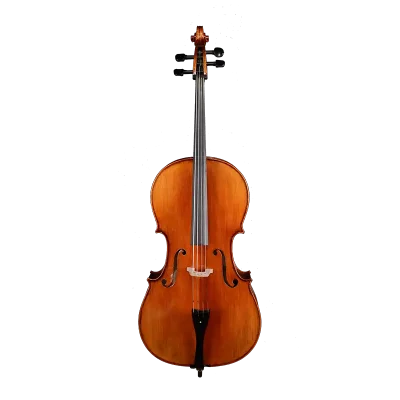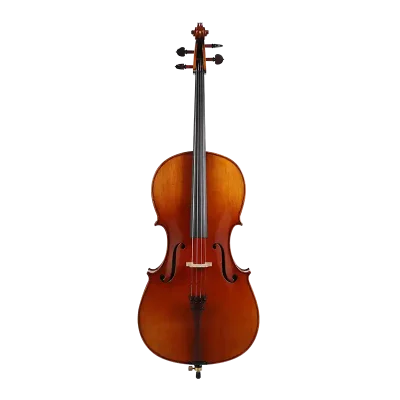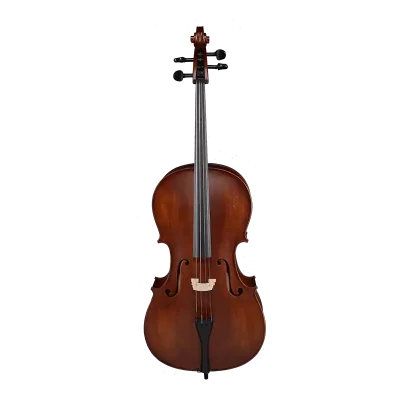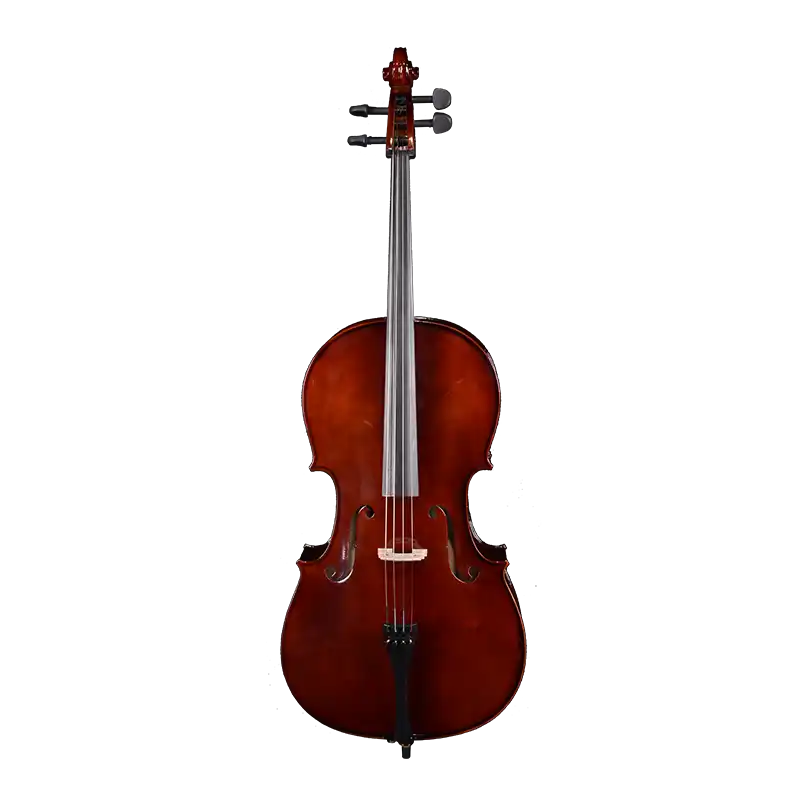













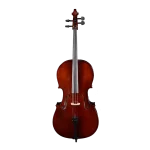



Additional information
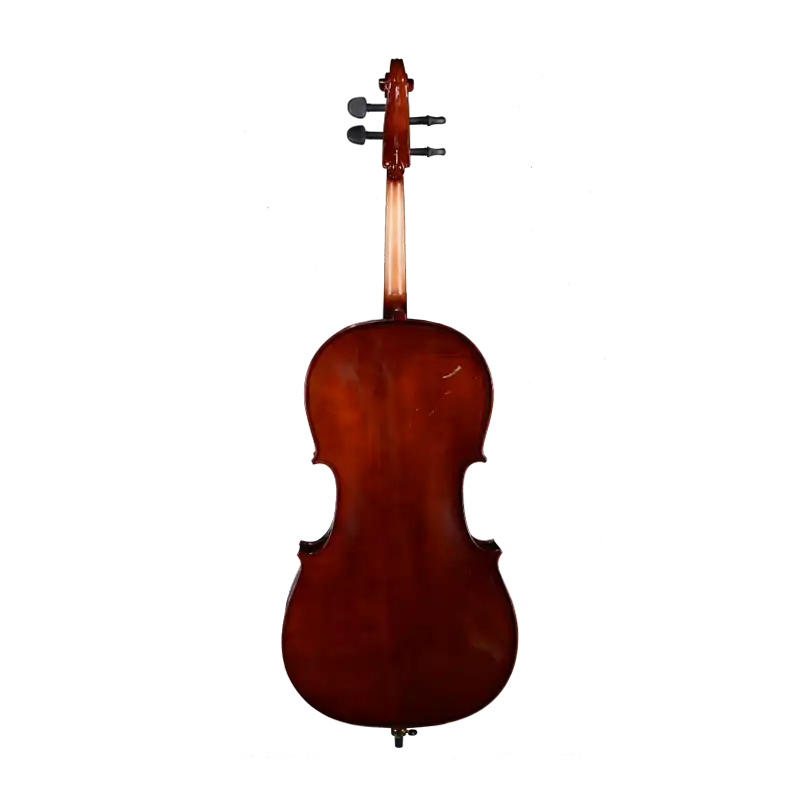
| Cellos Size | 1/10, 1/8, 1/4, 1/2, 3/4, 4/4 |
|---|---|
| Top Plate / Belly | |
| Back Plate & Ribs | Plain Maple |
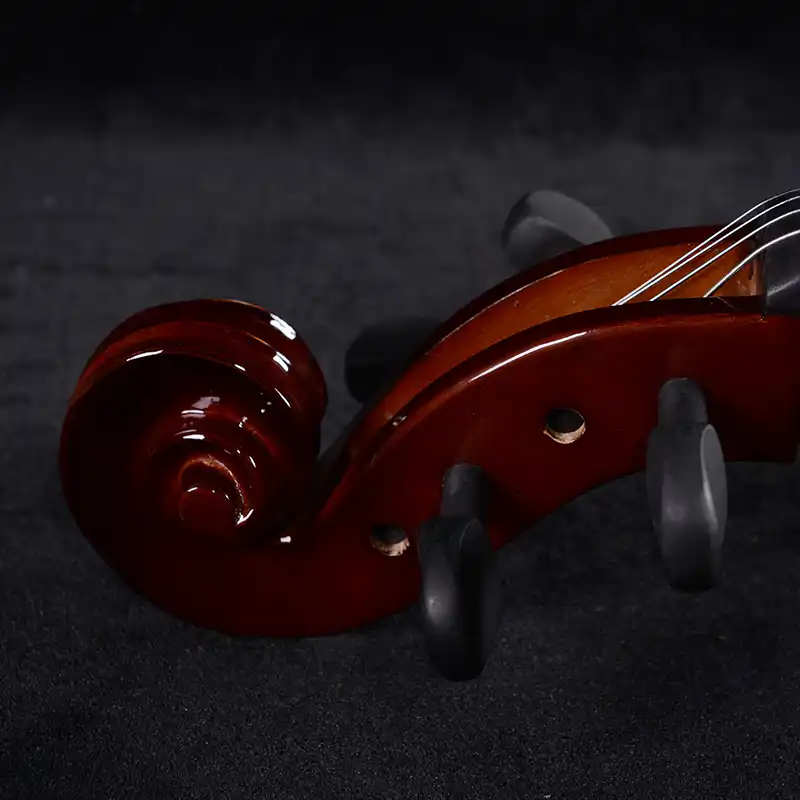
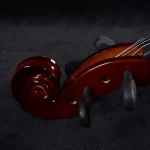
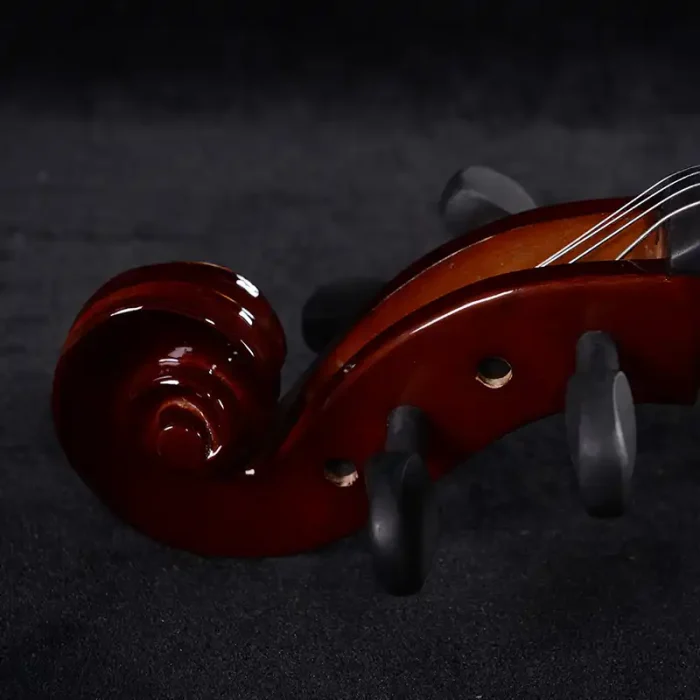
| Scroll & Neck | |
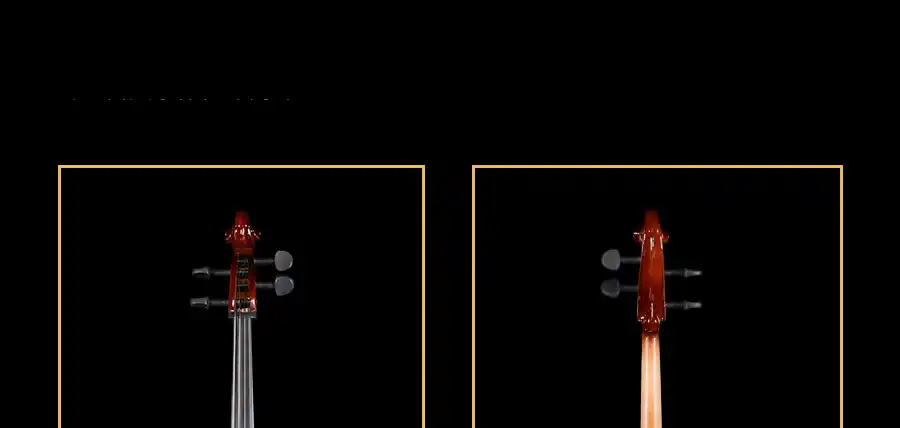
| Fingerboard | Black-dyed Red Alder |
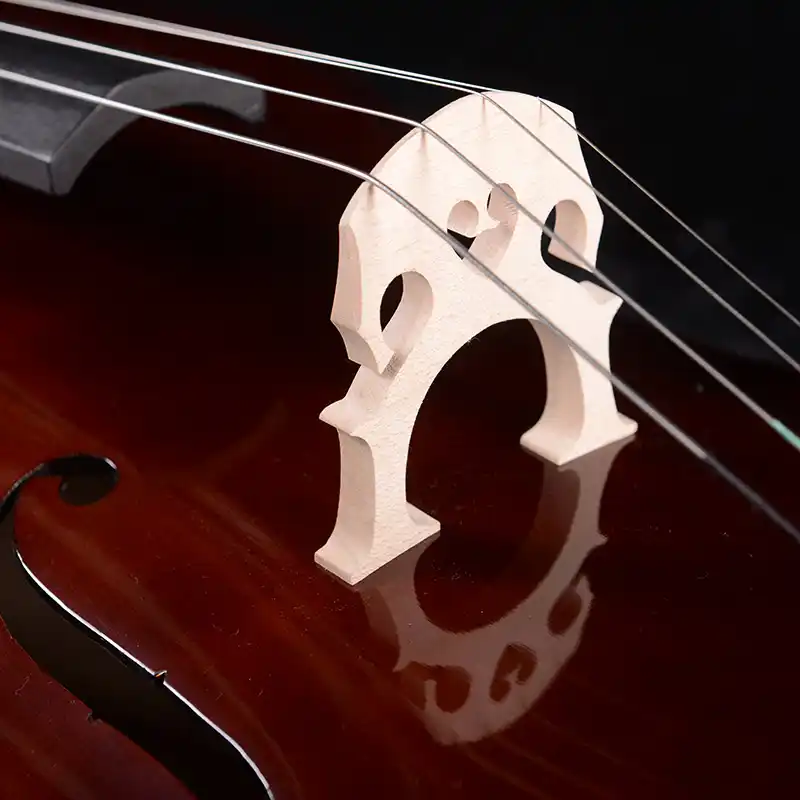
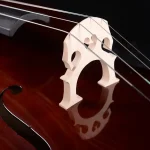
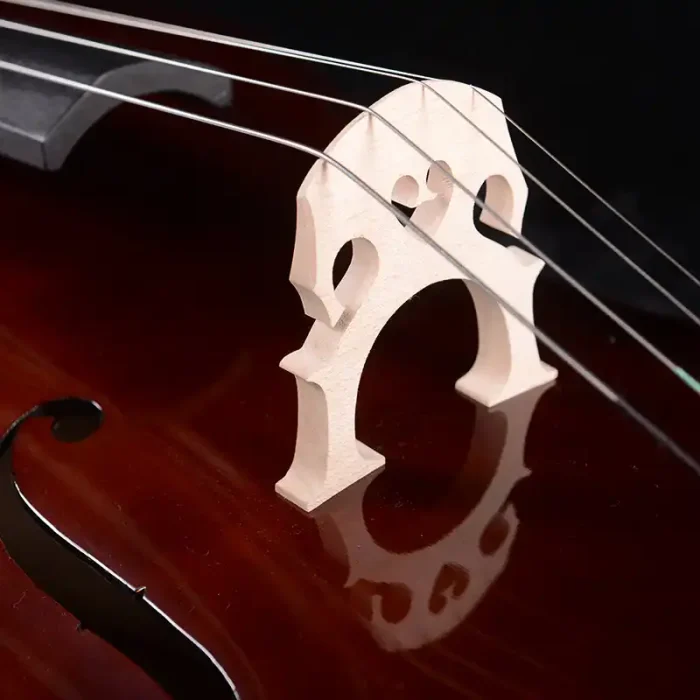
| Bridge | Standard Maple |
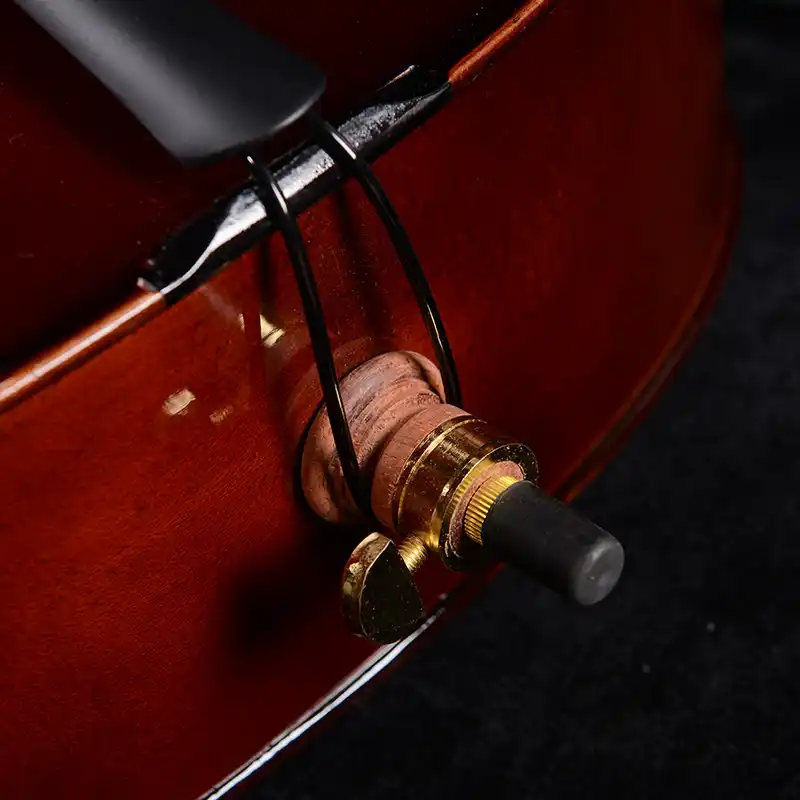
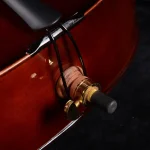
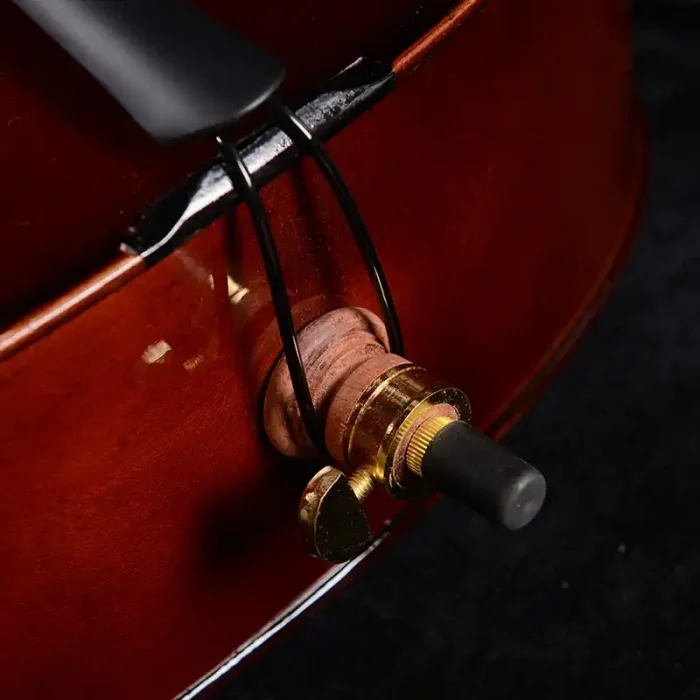
| Fittings | Metal Tailpiece/Black-dyed Red Alder |
| Varnish | Hybrid Varnish |
| Cellos Case Option | Canvas Bag (Free) / Hard Case (Paid) |
| Bow | Selected Red Sandalwood |
Remarkably Expressive Spruce Top Maple Cello, Dealer-Ready (LC02)
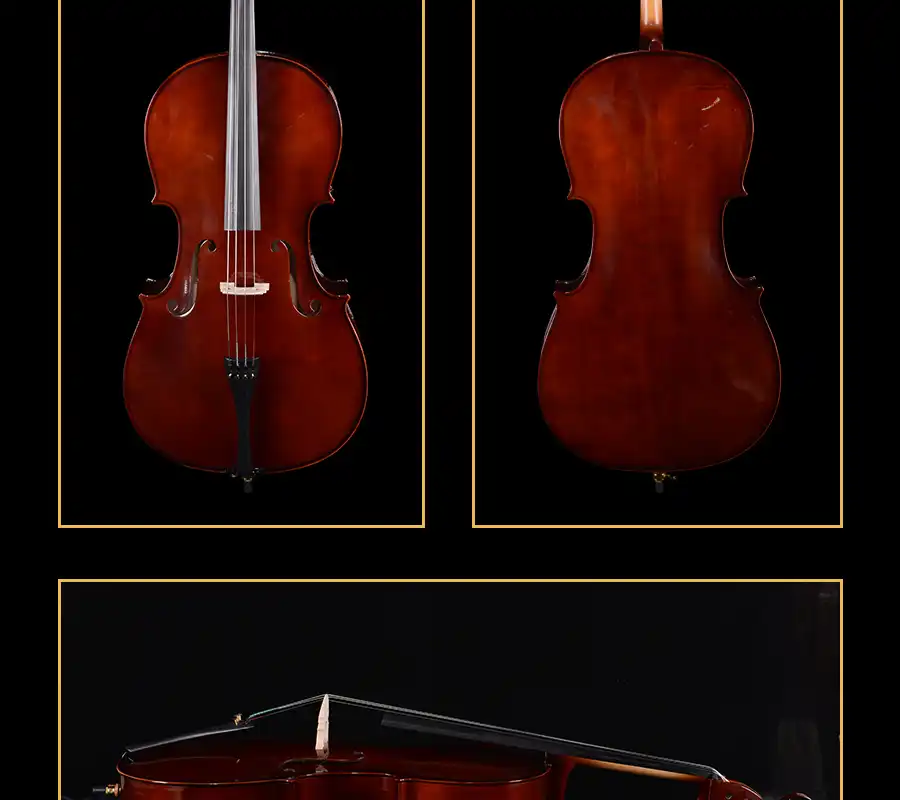
Spruce Top Maple Cello: A Clear Step-Up for Beginner Programs
Spruce Top Maple Cello is a practical way to offer a more responsive beginner instrument while keeping the supply chain predictable for B2B orders. Many dealers serve two realities at the same time: students want an instrument that “speaks” more easily, while schools and first-time buyers need stability, consistency, and low after-sales risk. A spruce top paired with maple back and sides supports that balance by adding clarity and articulation without turning the product into a fragile boutique item.
In real teaching environments, tone is not judged in a quiet audition room. It is judged in daily practice, section rehearsal, and ensemble blend. The spruce top helps produce quicker response under the bow, while maple back and sides contribute focus and definition in the low register. This can make intonation work feel more rewarding for beginners, because the cello gives clearer feedback and a more “connected” sound. For wholesalers and importers, it is also a strong story: a beginner cello that feels more expressive and confident, yet remains structured for consistent procurement.
To keep your website navigation clean and buyer-friendly, position this model within your entry lineup under Beginner Cellos. If your customers later request a more advanced response, you can guide them to Intermediate Cellos as a natural upgrade path without changing the supplier relationship.
For authoritative context about the instrument family and how cello sound functions in classical and modern ensembles, you may reference a neutral educational overview such as Encyclopaedia Britannica (Cello). This supports dealer education and product training materials without sounding like marketing.
Overall, the Spruce Top Maple Cello concept is simple: give beginner buyers a more open, more responsive experience while still meeting B2B expectations for consistency and scalable fulfillment.
Materials & Setup Choices That Work for Volume Orders
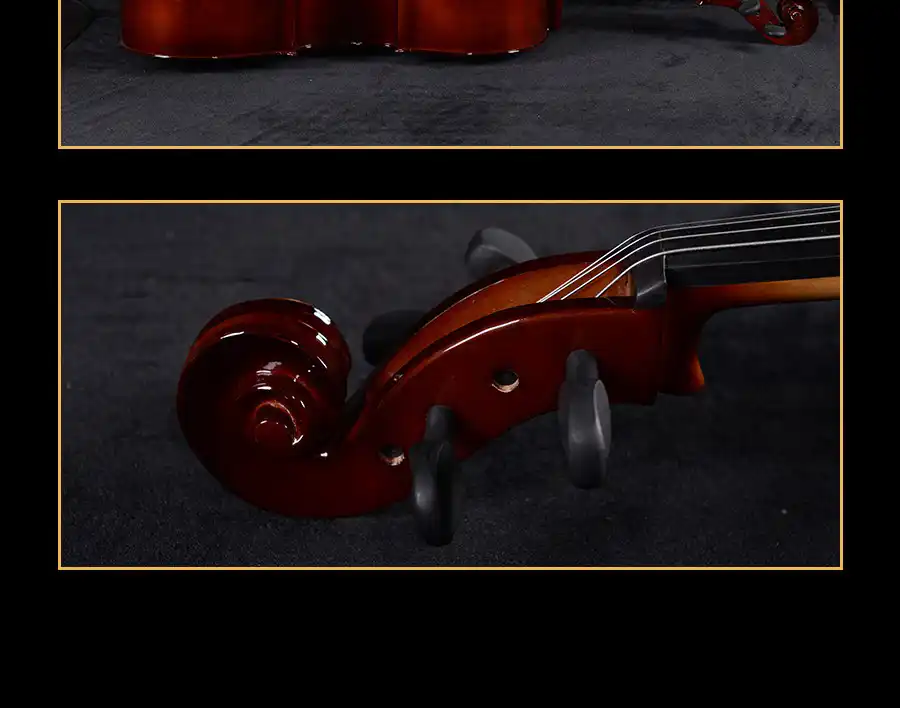
Spruce Top Maple Cello models depend on more than wood names. Dealers succeed when the setup, fittings, and replacement parts are straightforward across many units. LC02 is configured with rosewood fingerboard and rosewood pegs, which many buyers prefer for practical durability and familiar handling. The alloy tailpiece solution supports stable use and simplifies maintenance expectations. Standard strings keep procurement easy for buyers who need quick replacement access in local markets, and a 750-level bow provides a consistent entry-level playing tool for day-one readiness.
For B2B distribution, the most important “spec” is often consistency: the same feel across a batch, predictable response under moderate bow pressure, and a setup that does not require heavy rework after delivery. Dealers can position this as a beginner cello with a clearer response and better articulation—useful for student performances and class progress—without promising boutique complexity. This is a product designed to be sold and supported efficiently, not only admired.
Many wholesalers increase conversion by offering complete packages. If you plan to bundle cases, rosin, spare strings, or care items, connect buyers naturally to Accessories as part of a “ready-to-start” solution. This reduces buyer friction and strengthens your order value without changing the core product selection.
When customers ask why spruce and maple are traditional tonewoods, it helps to cite respected industry references that discuss string instruments, craftsmanship, and professional setup culture. For example, The Strad is widely recognized in the string community and can be referenced in educational content about instrument care, setup, and performance expectations.
This section can be summarized in your sales language as: practical hardware, simple replacement, and a setup philosophy designed for bulk orders and stable dealer operations.
Sound Character: Clearer Response with Beginner-Friendly Control
Spruce Top Maple Cello is often chosen when buyers want a beginner instrument that feels more alive under the bow. A spruce top tends to support quicker “start” and a more immediate response, which helps students learn bow control and articulation. Maple back and sides can add focus and definition to the tone, making the low register feel cleaner and more organized—especially helpful in ensemble work where the cello needs to support harmony without becoming muddy.
For dealers, the most reliable messaging is not “concert soloist tone.” It is “better feedback for learners.” Beginners improve faster when the instrument responds predictably and allows them to hear changes in bow speed, contact point, and pressure. LC02 is positioned to deliver that kind of feedback without demanding advanced technique to unlock basic sound. This makes it suitable for student performances, school orchestra seating, and step-up retail where buyers are upgrading from the most basic entry instruments.
Consistency requires process. When customers ask about how you control variation, you can reference a clear QC narrative rather than vague claims. Our production and inspection approach is presented here: Quality Control & Workshop Process. Integrating this link into your product page helps importers and wholesalers evaluate risk and build confidence before purchase.
If your customer base includes advancing students, you can also position this as a bridge product: more responsive than the most basic options, yet still aligned with beginner budget structures. Then, once the buyer requests more complexity, direct them toward Intermediate Cellos as the next tier in your catalog ladder.
In practice, the Spruce Top Maple Cello approach supports clarity, controllable warmth, and dealer-friendly consistency—exactly what matters in beginner-to-step-up channels.
B2B Positioning: Dealer-Ready, Brand-Compatible, Scalable
Spruce Top Maple Cello becomes a strong B2B product when the offer is structured around repeat orders and clear tiering. LC02 can serve as the “premium beginner” option in a wholesale lineup: a model that sounds more open and expressive than the most basic entry instruments, while remaining stable enough for volume distribution. This is attractive for retailers who want to reduce returns and for schools that need instruments durable enough for frequent handling.
For importers and wholesalers, the key value is a repeatable specification. The same core configuration can be reordered, scaled, and documented. If you run private label distribution, you can integrate branding, cartons, and standardized bundle components without changing the product’s fundamental identity. That pathway is supported through OEM / ODM service, which can be used for logo application, packaging requirements, and batch consistency planning.
To keep site navigation aligned with buyer psychology, anchor this model under Beginner Cellos and present clear upgrade routes. For customers who want top-tier craftsmanship and projection later, you can guide them toward Professional Cellos as the destination tier. This “level ladder” improves buyer trust because it signals that you understand progression rather than pushing a single product for everyone.
In short, LC02 is designed to be sold repeatedly: it supports confident beginner playability, clear story-based positioning, and a supply structure that makes sense for dealer operations.
QC, Packaging, and Delivery: Export-Ready Execution for Wholesale
Spruce Top Maple Cello orders are judged not only by sound, but by how reliably the shipment arrives ready for distribution. For B2B buyers, packaging discipline and delivery communication are margin protection tools. LC02 is prepared with a wholesale mindset: inspection checkpoints, protective packing options, and a workflow that supports consistent batch delivery. This reduces time spent on post-arrival issues and helps dealers move inventory faster.
When your buyer asks about logistics details—packing methods, delivery windows, and how you reduce transit risk—you can align that communication with a dedicated reference page: Shipping / Delivery / Packaging. Clear logistics language is one of the fastest ways to increase importer confidence, especially for first-time buyers who worry about damage risk and unclear processes.
QC transparency is equally important. If a buyer needs reassurance about workmanship and inspection standards, you can reference: Quality Control & Workshop Process. This turns “quality” from a claim into a verifiable process story, which is essential in modern B2B procurement.
FAQ
Q1: Who is this cello designed for?
A1: It is designed for beginner programs, school orchestras, and step-up retail where buyers want a clearer response and a stable, dealer-friendly specification.
Q2: What is the sound character of a spruce top and maple body?
A2: The spruce top supports quicker response and openness, while maple back and sides help keep the low register focused and defined—useful for student progress and ensemble clarity.
Q3: Can I request OEM branding and packaging?
A3: Yes. OEM/ODM options such as logo, cartons, and accessory bundles can be arranged through the OEM service pathway.
Q4: What is the typical delivery time?
A4: A common delivery window is 7–15 days depending on order structure, inspection schedule, and destination logistics.
Q5: Can I bundle accessories and cases?
A5: Yes. Many buyers bundle cases, rosin, spare strings, and care items to simplify procurement and improve customer readiness.